



“No teachers, no subject; no subject, no teachers”
Computer science is more relevant than ever: from AI and data to gaming and cybersecurity, yet there is a lack of a solid foundation in education. Many schools do not offer the subject, and qualified teachers are in short supply. The Master’s in Computer Science Teaching at Fontys Education aims to change this and also hopes to attract teachers from other disciplines who wish to broaden their knowledge.
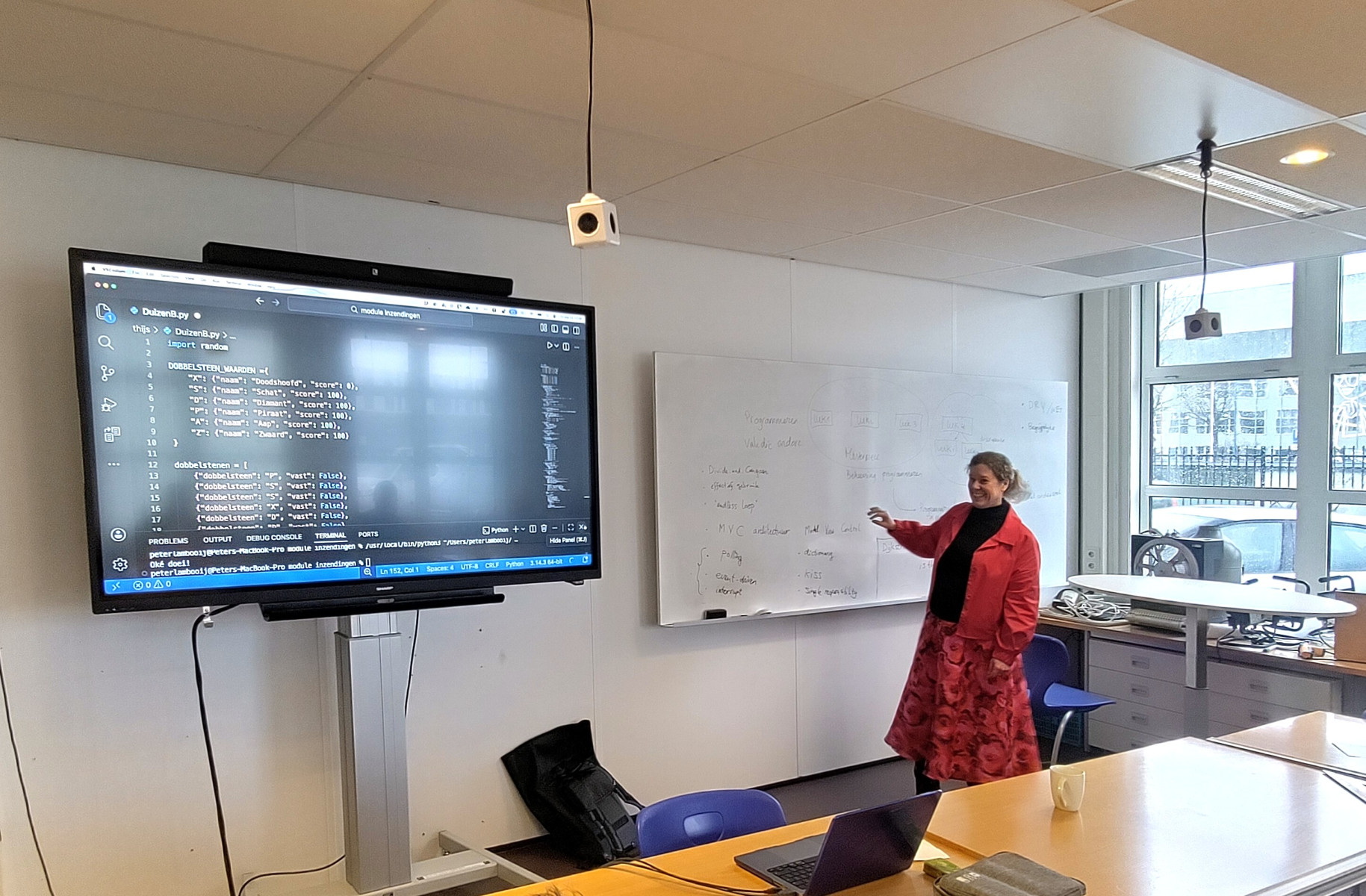
The demand for well-trained computer science teachers is therefore growing, but the supply is lagging behind. Fontys Education aims to change this with its new Master’s programme in Computer Science Teaching. Mandy Stoop (photo), lecturer on the Master’s in Computer Science Education, explains: “Where do school subjects come from? They are 17th-century sciences. And in the 17th century, they were of course not yet that far along with computer science. Computer science has therefore not automatically become a school subject, unlike subjects such as mathematics or physics.

No solid foundation
Computers now play a central role in society, and no one disputes that computer science is a highly relevant subject. Yet this has had only a limited impact on education. Of course, there were plans to make greater use of computers, and so the subject of Information Technology was introduced in the lower years of secondary school. But beyond that, little was done to follow through on this in the early 1990s. Computer science is now an optional school-leaving exam subject, which means schools are not obliged to offer it. As a result, there is a lack of a solid structural foundation. Many teachers who taught the subject after retraining from disciplines such as mathematics are now retiring en masse. There is a lack of new recruits. The traditional route – first a university degree in Computer Science followed by teacher training – appears unattractive to many graduates.”
National impact
It was precisely this difficult path that prompted the development of the Master’s programme in Computer Science Education. No easy task, as most first-degree teacher training programmes build on a second-degree programme, but such a programme barely exists for the subject of computer science. Yet the step was taken. Stoop: “Ultimately, we at the Engineering Teacher Training Programme decided: ‘It has to happen, given the history and relevance of the subject.’ Together with lecturer and programme coordinator Erik van Alphen, we set out to explore the field and attended all sorts of networking events across the country. The programme finally launched in September 2025 and is the first of its kind in the country. Other universities of applied sciences are now following suit, which is important for the national impact.
The chicken-and-egg dilemma
One of the biggest challenges is visibility. Many potential students simply do not know that this course exists. Furthermore, the subject itself is not yet firmly established in the curriculum, creating a classic chicken-and-egg dilemma: without the subject, there are no teachers; without teachers, there is no subject. The programme therefore focuses explicitly on people who are already working in education. Teachers who already teach computer science but lack formal teaching qualifications. Or teachers from other disciplines who wish to switch to this field or teach it as a second subject. With a secondary school teaching qualification and an affinity for the subject, they can join the programme.
Computational thinking
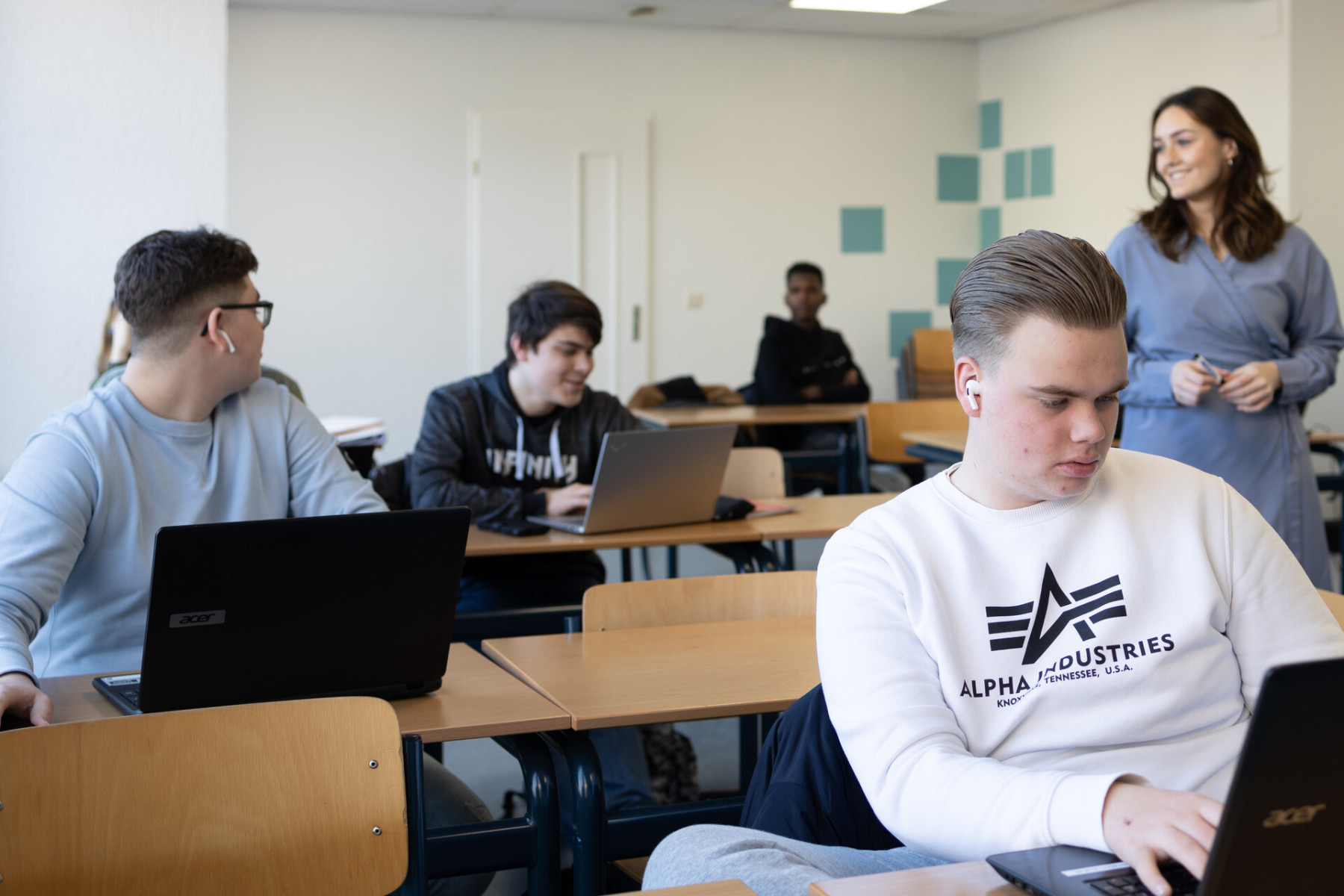
Fellow lecturer Bas Michielsen: “Regarding that chicken-and-egg dilemma: I think there are plenty of potential chickens out there, but we need to catch them first. So that they can then start laying eggs.” To which Stoop adds: “Of course, it’s simply a very interesting and trendy field. Everything to do with AI and data, everything that’s new, hot and happening. The subject is very close to the pupils’ everyday lives and everything they’re currently engaged in. For example, gaming and social media, but also data and cybersecurity. Yet it goes beyond just technology. Computer science also helps pupils think critically about technology. How do algorithms work? Why are apps addictive? And what does it mean that users themselves are often the ‘product’ of platforms such as Instagram and TikTok, which are effectively advertising machines? Computer science plays an important role in the development of thinking skills. We call this computational thinking: the ability to think abstractly and solve problems systematically. That is essential for pupils’ future.”
Accessible route
However, the programme is not just about content, but also about motivation. Working in the ICT sector is generally more financially attractive than working in education. “That is why teaching is primarily a matter of vocation,” says Michielsen, “a desire to pass on knowledge and create social value. That is precisely where the opportunity lies. There are many professionals who, at a certain point in their careers, want to make a difference to others. They too can join the programme, provided they meet the entry requirements. “The tricky part, of course, is that you do need a secondary school teaching qualification to enter this Master’s programme. The first cohort, which started in September 2025, includes a number of maths teachers, as well as a history teacher. It is expected that this Master’s in Computer Science Teaching can be completed within two years, and that most students will graduate within the two years they have to complete the programme, without falling behind. This makes it an accessible route for a broad target group. And hopefully, the Master’s programme will thus increase the supply of well-trained computer science teachers, so that the subject also gains a more secure place within the education system.
Is a Master’s in Computer Science right for you? The Master’s in Computer Science Education links relevant topics such as web design, the Internet of Things, programming, and AI & Data to your pedagogical and didactic challenges. The programme will equip you to take a more proactive role at school, particularly in relation to digital literacy and within the classroom. You can find more information about this Master’s programme on our website (in Dutch).
Author: Erik Bienefelt
Photos: teachers’ private archives

Fontys Hogeschool ICT
Rachelsmolen 1, gebouw R10
5612 MA Eindhoven
fontysict-alumni@fontys.nl
Copyright © 2026 Fontys School of Information and Communication Technology