



Collaboration with SMEs is growing rapidly
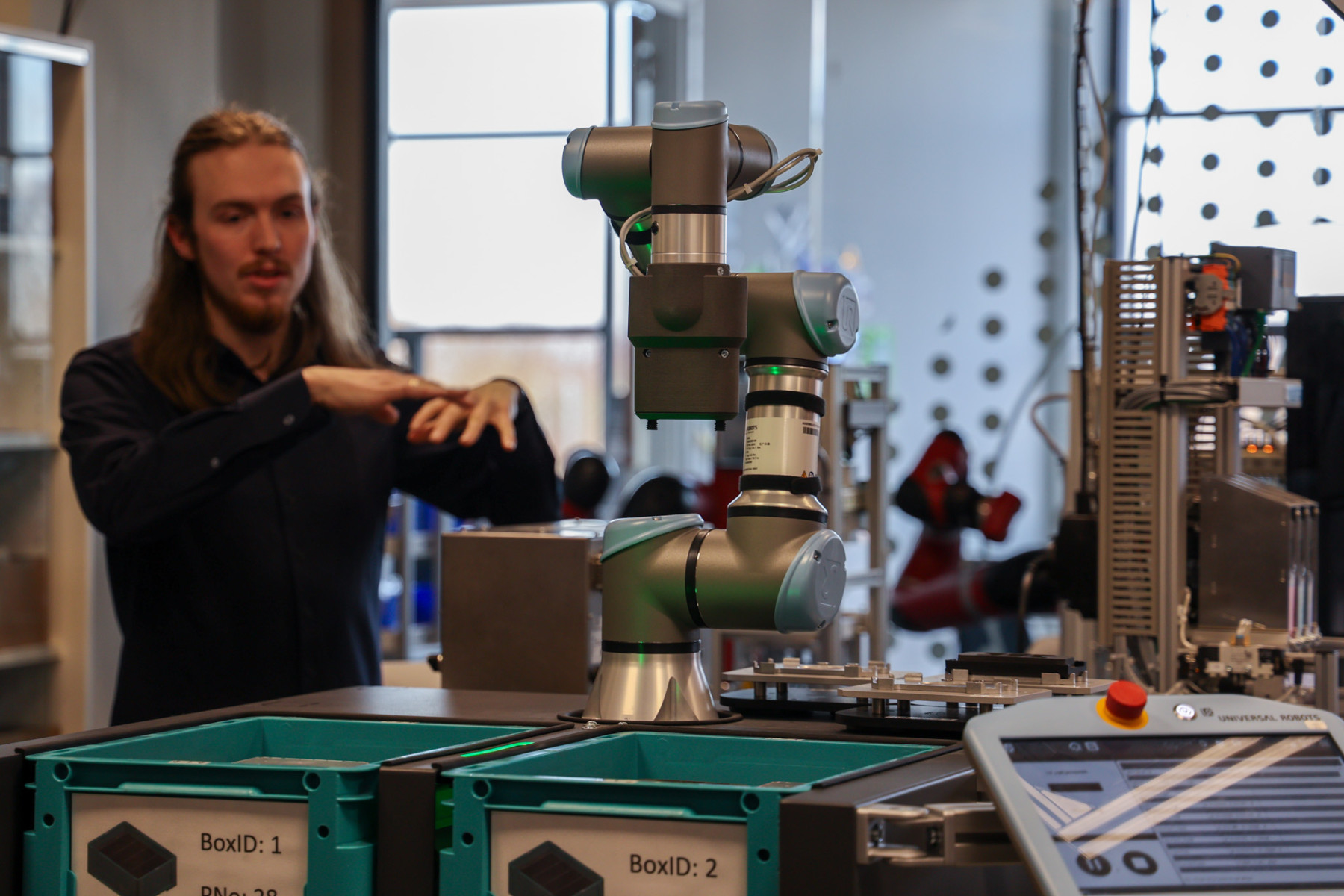
Over the past ten years, universities of applied sciences have become a key driver of innovation. A network analysis by Birch shows that the number of research partners increased tenfold between 2015 and 2024, reaching over 64,000. It is striking that around three-quarters of these partners are SMEs, which underlines that universities of applied sciences, such as Fontys, are an accessible and practical Research & Development partner, particularly for smaller businesses.
Practice-oriented research bridges the gap between education and professional practice and yields concrete innovations, ranging from sustainable recycling to applications of drones and robotics. At the same time, this growth is under pressure due to a lack of structural funding. According to Maurice Limmen, chair of the Netherlands Association of Universities of Applied Sciences, the network is growing faster than the available resources, thereby jeopardising innovation and the earning capacity of businesses.
Well connected
The Birch report provides a number of clear insights for Fontys. In terms of its ‘centrality position relative to the overall network’, Fontys sits in the broad middle of the university of applied sciences network. This means that Fontys is well connected, but does not emerge in this analysis as one of the most dominant players. Fontys director Arian Steenbruggen: “Fontys plays a clear and stable role in the network, but is no longer at the very top in terms of centrality.”
In 2015, Fontys actually held a very central position and was at the top of the network. How can this difference be explained? In 2024, Fontys remains strongly connected, but is relatively less central than it was at that time. As the report also indicates, this does not point to a weakening, but to a normalisation of network positions. In other words: Fontys has not become any less strong; the network has grown and become more diverse, causing the relative and central position of individual institutions to shift. As Arian Steenbruggen points out: “We do not see this as a decline for Fontys, but primarily as the maturing of the network as a whole.”
Key player
Furthermore, the Birch analysis shows that, compared to 2015, Fontys has relatively more connections in projects with international partners. The regional cluster map also reveals that Fontys is a key player in the southern Netherlands. Arian Steenbruggen: “The increase in international collaborations underscores that Fontys is positioning itself ever more strongly within a broader, European context.”
In short: in 2024, Fontys finds itself in the broad middle of the higher professional education network, whereas in 2015 it occupied a more central position. Fontys is still at least as well connected, and possibly better, but due to the strong growth and development of the network, its relative position has changed. At the same time, Fontys has a relatively large number of international partnerships and remains a major, stable player with a strong regional, national and European network. As Arian Steenbruggen summarises: “Fontys is and remains a robust network player, with a firm foothold at multiple levels.”
Author: Wim Pleunis
Photo: Polina Terentjeva

Fontys Hogeschool ICT
Rachelsmolen 1, gebouw R10
5612 MA Eindhoven
fontysict-alumni@fontys.nl
Copyright © 2026 Fontys School of Information and Communication Technology